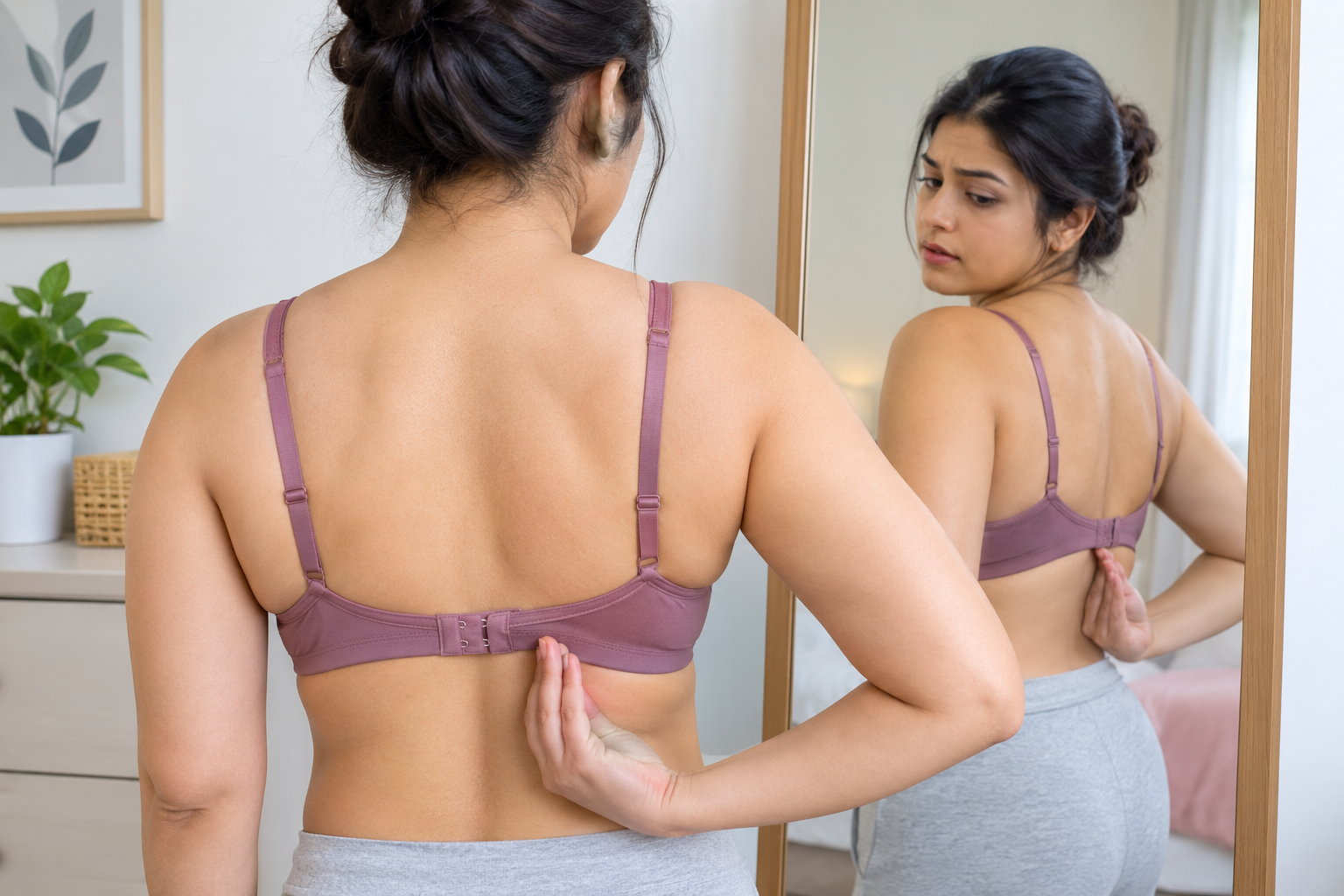
Bra Band Rides Up? What It Means and How to Fix It
A bra band that rides up at the back can be uncomfortable and may be a sign that your bra is not fitting properly. While the band should feel snug and supportive, it should also stay reasonably level around your body.
If you notice that your bra band keeps moving upward during the day, there may be several possible reasons. The band could be too loose, the straps may be adjusted too tightly, or the bra may have stretched over time. Learning why your bra band rides up can help you identify the problem and find a more comfortable fit.
What Does It Mean When Your Bra Band Rides Up?
When the back band of your bra moves upward instead of staying reasonably level, it usually means the band is not providing the right amount of support. A properly fitting band should feel snug around your ribcage and stay in place during normal movement.
A band that rides up does not always mean you need a different bra size. The problem can also be related to strap adjustment, the bra’s age, the way it is fastened, or the overall design. Checking the band, straps, and fit together can help you understand what may be causing the problem.
Why Does My Bra Band Ride Up?
There are several reasons why a bra band may ride up at the back. The most common cause is a band that is too loose, but strap adjustment, the bra’s condition, and how it is fastened can also affect the fit.
1. The Band May Be Too Loose
The band provides most of the support in a bra, so it should feel snug around your ribcage without being painfully tight. If the band is too loose, it may gradually move upward toward your shoulder blades instead of staying level.
If you can easily pull the band several inches away from your body or it constantly rides up during normal movement, check your band measurement and compare it with the brand’s size guide.
2. The Straps May Be Too Tight
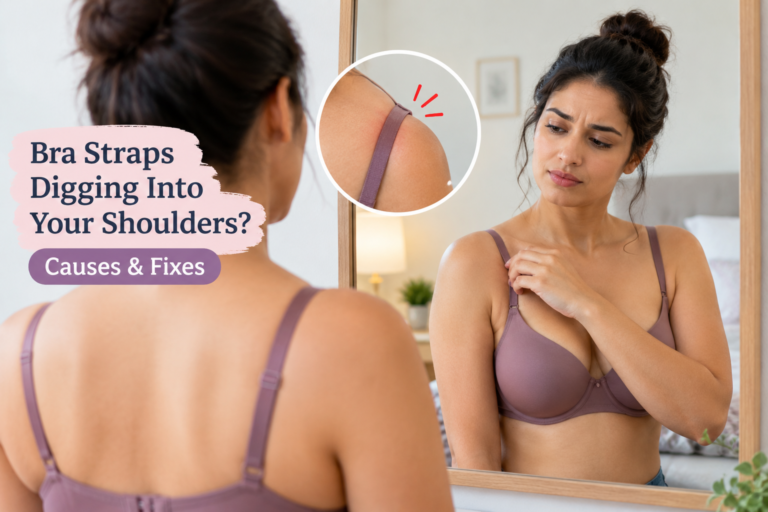
Bra straps are designed to help hold the cups in position, but they should not provide most of the support. If the straps are adjusted too tightly, they can pull the back of the bra upward and contribute to a riding-up band.
Try loosening the straps slightly while keeping them comfortably secure on your shoulders. Then check whether the band stays more level around your body.
3. The Bra May Be Worn on the Wrong Hook
Most bras with hook-and-eye closures are designed to fit comfortably on the loosest hook when they are new. This gives you room to tighten the band gradually as the bra stretches with wear.
If you are already using a tighter hook even though the bra is relatively new, check whether the band size is appropriate. On the other hand, if an older bra only feels supportive on the tightest hook, the band may have stretched and the bra may need replacing.
4. The Bra May Be Old or Stretched
Bra bands can lose some of their elasticity over time, especially with frequent wear and washing. As the elastic becomes less supportive, the band may start riding up even if the bra originally fitted well.
If a bra that once stayed comfortably in place now feels loose or requires the tightest hook, it may simply be reaching the end of its useful life. Following the care instructions can help your bras maintain their shape and elasticity for longer.
How to Check Your Bra Band Fit at Home
You can do a simple bra band fit check at home by looking at how the band sits and how it feels when you move. You do not need special equipment—just a mirror and a few minutes to check the fit carefully.
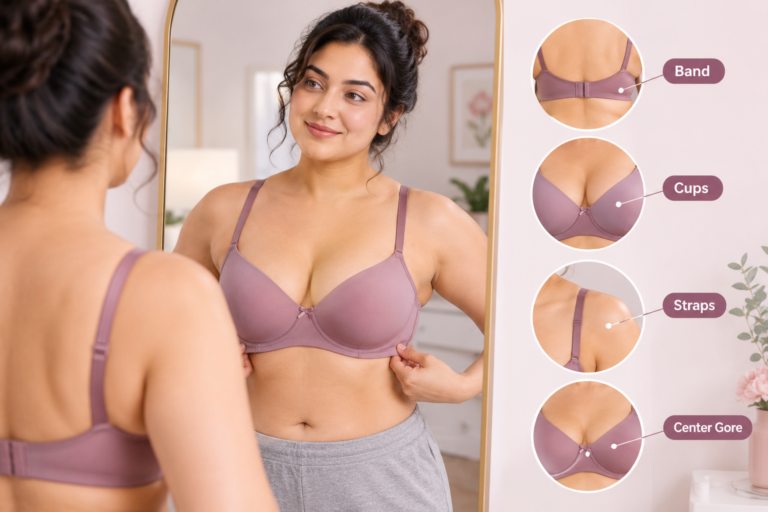
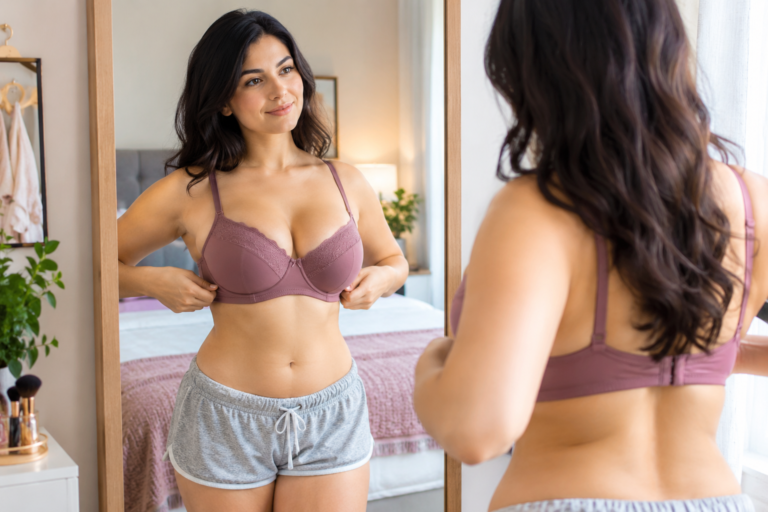
- Check the back of the band: Stand in front of a mirror and check whether the band stays reasonably level across your back. If it slopes noticeably upward, the band may be too loose or the straps may be pulling it upward.
- Check how snug the band feels: The band should feel snug and supportive without causing painful pressure. You should be able to slide a finger comfortably underneath the band without it feeling excessively loose.
- Raise your arms and move normally: Raise your arms, sit down, reach forward, and move naturally. The band should remain reasonably in place rather than shifting significantly upward.
- Check the straps: Make sure the straps are adjusted comfortably and are not so tight that they pull the back of the bra upward. The straps should help position the cups without carrying most of the support.
- Compare the fit with your measurements: If the band still rides up after adjusting the straps, recheck your band measurement and compare it with the brand’s size guide. Your measurements can provide a useful starting point when choosing a different size.
What to Do If Your Bra Band Rides Up
If your bra band keeps riding up, start by checking the fit before simply tightening the straps. Look at the band, straps, cups, and your measurements together to identify what may be causing the problem.
1. Check Your Band Size
If the band feels loose and consistently rides up at the back, recheck your band measurement. Compare your measurement with the brand’s current size guide before deciding whether you need a different band size.
2. Adjust the Straps Comfortably
Try adjusting the straps so they feel secure without digging into your shoulders. Avoid tightening them excessively to compensate for a loose band, because this can pull the back of the bra upward and create another fit problem.
3. Check the Cup Fit
A band problem can sometimes be related to the overall fit of the bra. Check whether the cups contain your breast tissue comfortably without excessive spilling, gaps, or wrinkles. If the cups do not fit well, you may need to consider a different size or style rather than changing the band alone.
4. Consider the Bra’s Condition
If the bra has been worn frequently and the elastic feels noticeably stretched, the band may no longer provide the support it once did. In this situation, replacing the bra may be more helpful than trying to adjust it further.
5. Check the Brand’s Size Guide
Bra sizing can vary between brands and styles. Before buying a replacement, check the brand’s own size guide and compare it with your current measurements. Use the size information as a starting point, then pay attention to how the bra actually fits and feels.
Should You Go Down a Band Size?
If your bra band rides up, going down a band size may seem like the obvious solution, but it is not always the right answer. A smaller band can provide a firmer fit, but the cups and overall bra shape also need to work comfortably for you.
Before changing your band size, recheck your measurements and make sure the current band is actually too loose. If the band feels comfortable but the cups are too small or too large, changing only the band size may not solve the problem.
If you decide to try a different band size, check the brand’s size guide and compare the corresponding cup size as well. Bra sizing works as a combination of band and cup measurements, so changing one part can affect the overall fit.
When to Recheck Your Bra Size
our bra size may change over time as your body changes. Weight changes, pregnancy, breastfeeding, hormonal changes, or other changes in your body can affect how your bra fits.
If a bra that used to fit comfortably suddenly feels loose, tight, or difficult to keep in place, it may be worth taking your measurements again. A band that repeatedly rides up can be one sign that your current bra may no longer be the right fit.
If you are unsure about your measurements, read our guide on How to Measure Your Bra Size at Home: A Simple Step-by-Step Guide. It explains how to measure your band and bust at home and use those measurements as a starting point when checking your bra size.
Final Thoughts
A bra band that rides up can be a sign that the fit needs some attention, but the cause is not always the band size alone. Strap adjustment, cup fit, the bra’s condition, and the way the bra is worn can all affect how the band sits.
If your bra band keeps riding up, start by checking the fit carefully and rechecking your measurements if necessary. A comfortable bra should provide support while staying reasonably secure and comfortable during normal movement.