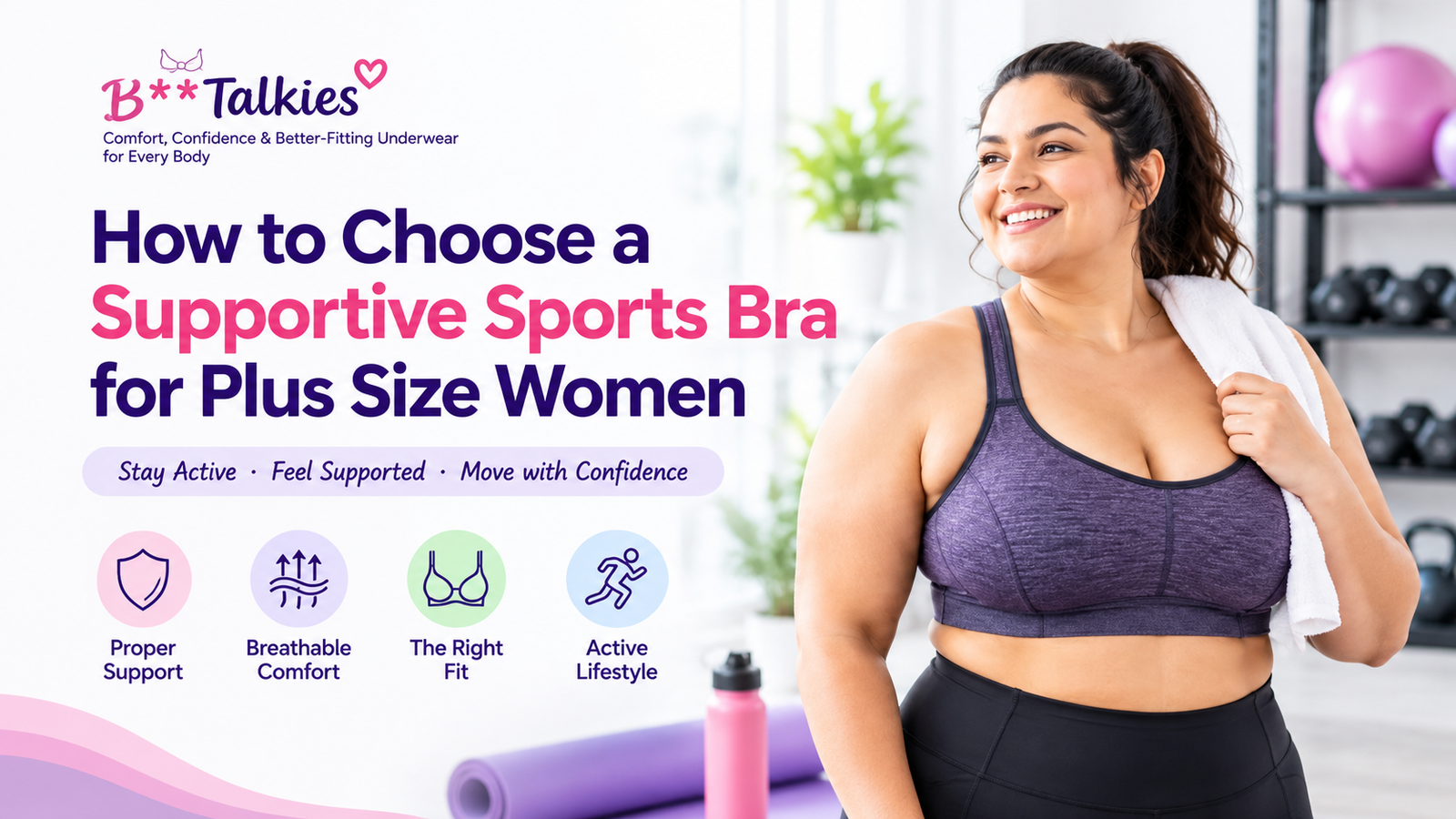
How to Choose a Supportive Sports Bra for Plus Size Women
Choosing a supportive sports bra for plus size women starts with understanding your workout, the level of support you need, and the fit that keeps you comfortable while moving. Finding a sports bra that actually works during exercise can make a big difference. A bra that feels fine while standing still may not feel nearly as good once you start walking, stretching, running, or jumping.
For plus size women, choosing a sports bra can involve a few extra considerations. The bra needs to control movement without feeling painfully tight, and it should stay in place while you exercise.
The good news is that you do not necessarily need the most heavily structured sports bra for every workout. The right choice depends on the activity, the amount of movement involved, and what feels comfortable and supportive for your body.
Why Choosing the Right Sports Bra Matters
A sports bra has a different job from an everyday bra. During exercise, your breasts move more than they normally would, and the amount of movement can increase as the intensity of the activity increases.
Exercise Creates More Breast Movement
Walking, running, jumping, and other physical activities can cause repeated breast movement.
How much movement occurs depends on the activity, your body, and the level of support provided by the bra.
A sports bra is designed to reduce this movement and help you feel more secure while exercising.
Support Can Improve Workout Comfort
Too much movement can become distracting or uncomfortable during a workout.
A supportive sports bra can help you concentrate on your exercise instead of repeatedly adjusting your clothing.
It can also make activities such as running, jumping, or fast-paced workouts feel more manageable.
The Right Bra Should Match Your Activity
Not every workout requires the same level of support.
A sports bra that works well for a relaxed walk may not be suitable for running or a high-intensity workout.
Before choosing a bra, think about what you actually do during exercise. This is one of the easiest ways to narrow down your options.
What Makes a Supportive Sports Bra Suitable for Plus Size Women?
Support does not come from one feature alone. The band, cups, straps, coverage, and overall construction all work together.
A Firm and Stable Band
The band is an important part of a sports bra because it helps keep the bra securely in position.
It should feel firm enough to stay in place when you move, but it should not make breathing uncomfortable or create painful pressure.
If the band moves around during exercise, the bra may not be providing the stability you need.
Cups That Contain the Bust
The cups should comfortably contain your breast tissue.
Spilling over the top or sides can become particularly uncomfortable during exercise because movement may cause rubbing or additional pressure.
For a fuller bust, you may find that sports bras with more coverage or individually structured cups provide a more secure feeling.
Comfortable and Supportive Straps
Straps need to stay in position without constantly slipping or digging into your shoulders.
Some women prefer wider straps because they can distribute pressure over a larger area.
Adjustable straps can also be useful because they allow you to fine-tune the fit.
Good Coverage
Coverage can affect both comfort and confidence during exercise.
A sports bra with adequate coverage can help keep the bust contained when you bend, stretch, or move quickly.
The ideal amount of coverage depends on your body, the activity, and your personal preference.
Strong and Supportive Construction
A sports bra should be able to handle repeated movement without quickly losing its shape or support.
Pay attention to the overall construction, including the band, cups, seams, straps, and closure.
A well-constructed sports bra should feel secure without making you feel as though your upper body is being squeezed into place.
Choose the Right Sports Bra Support Level
One of the most important decisions is choosing a support level that matches your workout.
Low Support for Gentle Activities
Low-support sports bras may be suitable for activities with relatively little breast movement.
Examples can include gentle stretching, yoga, relaxed walking, or similar low-impact activities.
If you are comfortable and well supported during the activity, there may be no reason to choose a high-support bra simply because you wear a plus size.
Medium Support for Moderate Activities
Medium-support sports bras can be useful for activities involving more movement but not constant high-impact motion.
Examples might include strength training, cycling, brisk walking, or moderate cardio.
The exact level you need will depend on your body and how much movement occurs during your particular workout.
High Support for High-Impact Activities
Running, jumping, aerobics, and other high-impact workouts generally create more breast movement.
For these activities, a high-support sports bra may provide better control and a more secure feeling.
Look for a combination of stable band construction, good coverage, supportive cups, and straps that remain comfortable during movement.
Why Support Level Matters More With Higher-Impact Exercise
A bra can feel perfectly comfortable during a slow walk but become inadequate once you start running.
That is why support level should be considered in relation to the activity rather than judged by the bra alone.
If you regularly switch between low- and high-impact workouts, you may find it useful to have more than one sports bra designed for different activities.
Compression vs Encapsulation Sports Bras
Sports bras generally use different approaches to control movement. Two common approaches are compression and encapsulation.
How Compression Sports Bras Work
Compression sports bras hold the breasts closer to the chest to reduce movement.
They often have a simpler construction and can provide a secure feeling during exercise.
However, the amount of compression that feels comfortable varies from person to person.
How Encapsulation Sports Bras Work
Encapsulation sports bras use separate cups to support each breast individually.
This can provide a more defined structure and may be particularly appealing to women with fuller busts.
Instead of simply pressing the bust against the chest, the cups provide individual support.
Combination Designs
Some sports bras combine compression and encapsulation.
These designs aim to reduce movement while also providing individual cup support.
For higher-impact exercise, a combination design may be worth considering if you want both control and structure.
Which Type May Suit a Fuller Bust?
There is no single answer for everyone.
Some women prefer the secure feeling of compression, while others find individual cup support more comfortable.
If you have a fuller bust, pay attention to how the bra controls movement without flattening or squeezing the breasts uncomfortably.
Trying different construction types can help you discover which approach suits you best.
How Should a Plus Size Sports Bra Fit?
A sports bra needs to fit properly before its support can work effectively. For more guidance, read our guide on how a bra should fit.
The Band Should Stay Firm and Level
The band should remain securely positioned while you move.
It should not repeatedly ride up, fold excessively, or shift around your body during exercise.
At the same time, it should not feel so tight that breathing becomes uncomfortable.
The Cups Should Contain the Bust
The cups should keep the bust comfortably contained.
There should not be obvious spilling over the top or sides, especially when you move.
If the cups are too small, the sports bra may become uncomfortable very quickly during exercise.
The Straps Should Stay Comfortable
The straps should remain in place without digging into your shoulders.
If you find yourself repeatedly adjusting them during a workout, the fit or strap design may need reconsideration.
There Should Be No Painful Pressure
A sports bra should feel supportive, but support should not mean pain.
Pay attention to areas where the bra presses against your ribs, shoulders, breast tissue, or underarms.
Some initial firmness is normal in a supportive sports bra, but persistent pain or numbness is a sign that something is not working.
Check the Fit While Moving
Do not judge a sports bra only by how it feels when you are standing still.
Raise your arms, twist your upper body, bend forward, and make a few movements similar to your workout.
The bra should remain secure without becoming uncomfortable.
How to Choose a Sports Bra for Different Activities
The best sports bra for you can change depending on what you are doing. Choosing a supportive sports bra also means considering how securely it stays in place during your usual workout.
Walking and Low-Impact Exercise
For walking and gentle exercise, you may not need the same level of support required for running.
Comfort, breathability, and freedom of movement may be more important.
A lighter sports bra can be perfectly practical if it provides enough support for the activity.
Strength Training and Gym Workouts
Strength training involves a mixture of movements.
You may bend, stretch, lift your arms, and move your upper body in different directions.
A medium-support sports bra with a secure band and comfortable straps may work well for many gym routines.
Cycling and Moderate Cardio
Cycling and moderate cardio can involve repeated movement without the same impact as running.
A supportive sports bra that remains stable while you move can help prevent distractions and discomfort.
Consider breathability as well, particularly if you exercise for longer periods.
Running and High-Impact Exercise
Running generally requires more support because of the repeated impact.
A high-support sports bra can help reduce breast movement and may make running more comfortable.
Look for a stable band, good cup containment, supportive straps, and a construction designed for high-impact activity.
HIIT, Jumping and Other High-Impact Activities
HIIT, or High-Intensity Interval Training, can include movements such as jumping jacks, burpees, high knees, and squat jumps.
These movements can create considerable breast movement in a short period.
For this type of workout, a high-support sports bra with secure construction is usually a better starting point than a low-support everyday sports bra.
Important Features to Look for in a Plus Size Sports Bra
Once you know the support level you need, individual features can help you compare different designs.
Wide and Supportive Bands
A wider band can provide a greater feeling of stability and may distribute pressure more evenly around the body.
It should stay securely positioned without rolling or digging into your skin.
Adjustable Straps
Adjustable straps allow you to make small changes to the fit.
This can be particularly useful if you have difficulty finding a comfortable strap length.
Secure Closures
Some sports bras use pull-on designs, while others have hook-and-eye or other closures.
A secure closure should keep the bra in place without becoming difficult or uncomfortable to wear.
If you prefer easier dressing, a front or back closure may be worth considering depending on the design.
Full-Coverage Cups
Full coverage can help contain the bust during movement.
This may be especially useful for running and other high-impact activities.
However, more coverage does not automatically mean a better fit. The cups still need to match your body shape.
Breathable and Comfortable Fabric
Exercise naturally creates heat and sweat.
A breathable fabric can make a sports bra more comfortable during longer workouts.
Softness also matters, particularly around areas where fabric and elastic repeatedly move against the skin.
Moisture Management
Sports bras can become uncomfortable when sweat remains against the skin.
Materials designed to move moisture away from the body may help you feel drier during exercise.
This can be particularly useful during longer or more intense workouts.
Reinforced Side Support
Side support can help keep the bust contained and may improve the overall feeling of stability.
If side support is important to you, check the product description or construction details when shopping online.
Common Sports Bra Problems and What They May Mean
Even a sports bra designed for high support can feel uncomfortable if the fit is not right. If you also want everyday support beyond workouts, explore our guide to comfortable, supportive bras for large breasts.
The Band Rides Up
If the band moves upward during exercise, it may not be providing enough stability.
The size, elastic, construction, or overall fit could be contributing to the problem.
The Straps Dig Into Your Shoulders
Straps that become painful during exercise may be carrying too much of the load.
Check whether the band is secure and whether the straps are adjusted correctly.
A different strap design may also feel more comfortable.
The Bust Spills Out
If breast tissue spills over the top or sides of the cups, the bra may not provide enough coverage or space.
This can become particularly uncomfortable when you are moving repeatedly.
Consider the cup size, shape, and coverage before simply tightening the straps.
Too Much Bouncing During Exercise
If you still experience significant movement despite wearing a sports bra, the support level may be too low for your activity.
A higher-support design or a different construction may provide better control.
Chafing or Skin Irritation
Repeated movement, sweat, seams, and elastic can cause rubbing.
If you experience chafing, look at the areas where the irritation occurs and consider whether the fabric, seams, or fit are contributing to the problem.
The Bra Feels Too Restrictive
A sports bra should reduce movement, but it should not make you feel unable to breathe or move naturally.
If you feel excessive pressure around your chest or ribs, the size or design may not be suitable.
More compression is not always better support.
How to Test a Sports Bra Before You Buy It
If you can try a sports bra before purchasing it, spend a little time moving in it rather than simply checking your appearance in the mirror.
Raise Your Arms
Lift your arms above your head.
Check whether the band stays in position and whether the cups continue to contain the bust.
Twist and Bend
Turn from side to side and bend forward.
These movements can reveal problems that are not obvious while standing still.
Walk or Move Around
Take a few steps or imitate some of the movements from your usual workout.
Pay attention to bouncing, shifting, strap movement, and pressure.
Check the Band and Straps
After moving around, check whether the band has shifted and whether the straps still feel comfortable.
If you are constantly adjusting the bra, it may not be the right choice.
Consider How It Feels Over Time
A sports bra may feel fine for five minutes but become uncomfortable after thirty or sixty minutes.
If possible, think about how the fabric, band, and straps are likely to feel throughout your normal workout.
What to Check When Buying a Sports Bra Online
Buying online can give you access to a much wider range of sizes and styles, but it requires careful checking. When comparing options online, look for a supportive sports bra with a clear size chart and details about its intended activity.
Check the Size Chart
Do not rely only on your usual clothing size.
Look at the sports bra’s specific size chart and check the measurements or band-and-cup options provided.
Different brands can use different sizing systems.
Look at the Support Level
Check whether the sports bra is described as low, medium, or high support.
Then compare that with the activity you plan to do.
A high-support bra may be unnecessary for gentle walking, while a low-support bra may not be suitable for running.
Read the Product Details
Look for information about:
- cup construction
- band width
- strap design
- coverage
- closure
- fabric
- moisture management
- intended activity
- support level
These details can tell you much more than a product photograph alone.
Check the Return Policy
Fit can be difficult to judge from a screen.
Before ordering, check the retailer’s return and exchange policy, including any restrictions that may apply to sports bras or other intimate apparel.
Read Multiple Customer Reviews
Reviews can provide useful information about sizing, support, comfort, and durability.
Look for repeated patterns rather than relying on one person’s experience.
If several customers mention that a particular style runs small, has a loose band, or works especially well for a fuller bust, that information may be useful when making your decision.
Do Plus Size Women Always Need a High-Support Sports Bra?
No.
The support level should match the activity, not simply the wearer’s size.
A woman who wears a plus size may be perfectly comfortable in a lower-support sports bra for gentle stretching or walking, while the same woman may need high support for running or jumping.
Your personal comfort and the amount of movement involved should guide the decision.
It is also worth remembering that support is not the same as tightness. A very tight bra is not automatically a supportive bra.
How to Find the Right Sports Bra for Your Body and Workout
Start by thinking about your most common activities. Ultimately, a supportive sports bra should provide reliable support without making your workout uncomfortable.
If you mainly walk or do gentle exercise, you may value comfort and flexibility more than maximum support.
If you regularly run, jump, or participate in high-intensity workouts, focus more closely on movement control and secure construction.
Then consider your own fit preferences. Some women prefer compression, while others feel more comfortable in individually structured cups. Some prefer wide straps, while others prioritize a particular neckline or closure.
You may also find that one sports bra cannot do everything equally well.
Having a lighter-support option for gentle activities and a higher-support option for demanding workouts can be more practical than trying to make one bra work for every situation.
Most importantly, do not judge a sports bra only by its appearance or by the word “high support” on the label. Pay attention to how it behaves when you actually move. If you are also comparing everyday options, our guide to the best plus size bras can help you explore other styles.
Final Thoughts
Choosing a supportive sports bra for plus size women comes down to more than finding the largest or tightest option available.
Think about your activity first, then consider the support level, band, cups, straps, coverage, fabric, and overall construction.
A good sports bra should help control movement while still allowing you to breathe, move, and exercise comfortably.
Whether you are walking, working out at the gym, cycling, running, or doing HIIT, the right level of support can make your workout experience much more comfortable.
The goal is simple: enough support to feel secure, without sacrificing comfort or freedom of movement.