
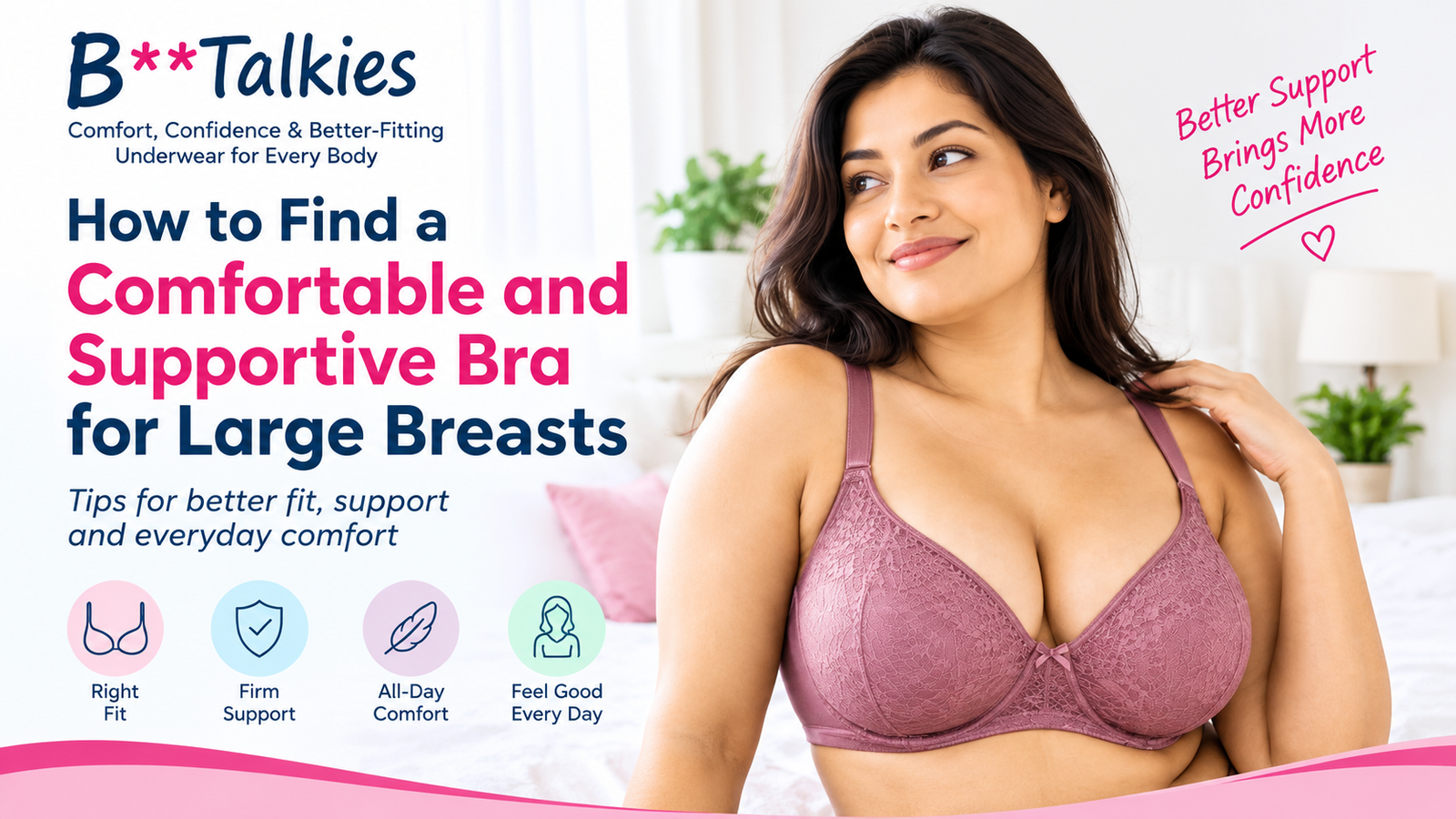
How to Find a Comfortable and Supportive Bra for Large Breasts
Finding a supportive bra for large breasts can make a real difference in everyday comfort, support, and fit. The right bra should feel secure without digging into your shoulders, squeezing your band, or leaving you uncomfortable throughout the day.
A bra may look great but dig into your shoulders. Another may feel comfortable at first but let the band ride up after a few hours. You may also find that the cups seem fine in one style but spill over or gape in another.
That is why choosing a bra for a larger bust is not simply about finding the biggest size available. The band, cups, straps, construction, coverage, and overall shape all have to work together.
The good news is that once you know what to look for, shopping becomes much less frustrating.
What Makes a Supportive Bra for Large Breasts Comfortable?
A supportive bra should hold the bust securely without making you feel squeezed, restricted, or constantly aware that you are wearing it. For larger breasts, a few details tend to matter more than others.
A Firm, Comfortable Band
The band is one of the most important parts of a supportive bra. It should feel snug around your body and sit level across your back. It should not gradually creep upward as you move. If the band is too loose, you may find yourself tightening the straps to compensate. That can put unnecessary pressure on your shoulders and still leave you without the support you need.
On the other hand, a band should not be so tight that breathing or normal movement becomes uncomfortable. A good starting point is firm and secure, but still comfortable enough to wear for several hours.
Cups That Fully Contain the Bust
The cups need to contain your breast tissue without cutting into it or leaving obvious gaps. Check both the top and the sides of the cups. Spilling over the edge can mean the cups are too small, but it can also mean that the cup shape simply does not suit your breast shape. Gaps can have the opposite appearance, but they do not necessarily mean you need a smaller size. The shape of the cup, the bra’s construction, and your breast shape can all affect how the cups sit. This is why trying different bra styles can sometimes make a bigger difference than simply changing sizes.
Straps That Support Without Digging
Bra straps should help with stability, but they should not feel as though they are carrying the entire weight of your bust. If the straps constantly dig into your shoulders, check the band first.
A supportive band should do much of the work. If the band is too loose, you may instinctively tighten the straps to keep the bra in place. Wider or more comfortably designed straps may also make everyday wear easier, especially if you spend long hours in your bra.
The Right Underwire or Wireless Design
Underwire and wireless bras can both work well for larger breasts. There is no universal winner. A well-designed underwire bra can provide useful shaping and support around the base of the breast. But the wire needs to follow your breast root reasonably well and should not dig painfully into your body.
Wireless bras can feel more relaxed and flexible. Some have wide bands, structured cups, side panels, or other support features that make them surprisingly supportive. If comfort is your biggest priority, do not assume that wireless automatically means better. Likewise, do not assume that underwire automatically means better support. The construction and fit matter more than the label.
Enough Coverage and Side Support
Coverage can be especially helpful if you want to feel secure throughout the day. Higher-coverage cups may help contain breast tissue and reduce the chance of spilling over the top. Side panels can also help keep the bust contained and create a more stable feeling.
But more coverage does not automatically make a bra supportive. A full-coverage bra that does not fit properly can still gape, cut in, or move around. What matters is how the whole bra works on your body.
Finding the Right Size for a Supportive Bra for Large Breasts
Even a well-designed supportive bra can feel uncomfortable if the size is wrong. If you have not checked your size recently, it is worth starting there rather than assuming your usual size is still the best one.
Our Size Guide explains the basic process for measuring your band and bust at home.
Check Your Band Size
Start by checking how the band sits around your body. It should remain relatively level rather than riding up between your shoulder blades. It should also feel secure without causing excessive pressure. Try raising your arms, walking around, and moving your upper body. If the band shifts significantly, pay attention to whether the problem is the size, the construction, or both.
Check Your Cup Fit
Next, look carefully at the cups. Your breast tissue should sit comfortably inside the cups. There should not be obvious spilling over the top or sides, and the cup should not leave large empty spaces. Remember that cup letters are not absolute measurements. A cup size can fit differently depending on the band size and the particular bra. That is one reason it is better to judge the actual fit rather than choosing a bra based only on a number or letter.
Recheck the Fit After Putting the Bra On
A bra can look fine while you are standing still and feel completely different once you start moving. After putting it on, make sure your breast tissue is comfortably positioned inside the cups. Adjust the straps only enough to keep them comfortably in place.
Then move around. If the bra immediately starts shifting, digging, spilling, or gaping, it is worth reconsidering the fit before deciding that the style simply does not work for you.
Choosing a Supportive Bra for Large Breasts by Style
There is no single best bra style for every woman with a larger bust. Your ideal choice depends on what you want from the bra and what you usually wear.
Choosing Full Coverage in a Supportive Bra for Large Breasts
Full coverage bras can be a good option if you prefer more containment and a secure feeling. They may work particularly well under everyday clothing when you want the bust to stay comfortably contained. Just remember that coverage and fit are different things. A full-coverage cup still needs to match your breast shape.
Underwire Bras
Underwire bras can provide a more structured feel and defined support around the base of the bust. For some women with larger breasts, this can make a noticeable difference. However, the wire should not cause persistent pain or sit directly on breast tissue. If it digs in, pokes, or becomes uncomfortable after a short time, reassess the fit or try a different construction.
Wireless Bras
Wireless bras can be a useful choice when you want flexibility and less structure. Modern wireless designs can include wider bands, supportive cups, side panels, and other features intended to provide stability without an underwire. They may be especially appealing for relaxed everyday wear. If you are comparing the two options, our Wireless vs Underwire Bras guide goes into more detail about the differences between these constructions.
Minimizer Bras
A minimizer bra may be worth considering if your main concern is how much the bust projects forward under clothing. Rather than actually making the breasts smaller, a minimizer redistributes breast tissue to create a less projected appearance. If that sounds like the problem you are trying to solve, our guide What Is a Minimizer Bra? explains how this style works and what to look for in the fit.
How to Choose a Supportive Bra for Large Breasts
A bra can feel supportive in the fitting room and still become annoying after a few hours. That is why it helps to pay attention to what happens when you actually move around.
The Band Stays in Place
The band should remain reasonably stable throughout normal movement. If it repeatedly rides up, twists, or shifts, something needs attention. Sometimes the band is simply too loose. In other cases, the bra’s design may not suit your body particularly well.
The Cups Do Not Spill or Gap
Look at the cups from several angles. Breast tissue should remain comfortably contained without obvious bulging. At the same time, the cups should not have large empty spaces. Small differences can happen depending on posture and breast shape, but persistent spilling or gaping is worth investigating.
The Straps Stay Comfortable
Straps should stay on your shoulders without needing constant adjustment. If you find yourself tightening them throughout the day, do not assume that tighter straps will solve the problem. The band and cups should provide most of the support. If they are not doing that job, the straps may end up taking too much of the load.
You Can Move Without Constant Adjustments
This is an underrated part of bra fitting. Raise your arms. Stretch. Walk around. Sit down. Bend forward. If you have to pull the cups back into place or adjust the band every few minutes, the bra probably needs another look. A supportive bra should move with you reasonably well rather than requiring constant attention.
Common Bra Problems for Large Breasts
Some problems are particularly frustrating when you are trying to find a supportive everyday bra. Fortunately, they often provide clues about what needs changing.
Straps Digging Into the Shoulders
Shoulder pain or deep strap marks can be a sign that the straps are doing too much work. Before simply loosening or tightening them, check the band. If the band is not secure enough, the straps may be compensating for the lack of support. We have a separate guide on [Bra Straps Digging Into Your Shoulders] that covers common causes and practical fixes.
The Band Riding Up
A band that slowly creeps upward at the back is another common warning sign. It may mean that the band is too loose or that the bra is not providing the stability you need. Our article [Bra Band Rides Up? What It Means and How to Fix It] looks at this problem in more detail.
Cup Spilling or Gaping
Spilling over the cups can be uncomfortable and obvious under clothing. But gaping can be frustrating too, especially when you thought you had finally found the right size. Both problems can be caused by sizing, but cup shape also matters. If you regularly experience either problem, our guide [Bra Cups Gaping or Spilling?] can help you work through the possible causes.
Underwire Causing Discomfort
Underwire should not be something you simply tolerate because the bra is supposed to be supportive. If the wire digs into your breast tissue, presses painfully against your body, or becomes uncomfortable after a short time, the size or shape may not be right for you. Sometimes a different wire shape will work better. In other cases, a wireless design may simply be more comfortable.
Testing a Supportive Bra for Large Breasts Before Buying
If you are shopping for a bra in person, do more than stand in front of the mirror. And if you are buying online, think about the movements you would normally make during a typical day.
Move Your Arms
Raise both arms, stretch, and move them naturally. Notice whether the band stays in place and whether the cups continue to contain your breast tissue. If everything shifts immediately, that is useful information.
Sit and Bend Forward
Sitting and bending can change how a bra feels. Check whether the cups remain comfortable and whether the band or underwire starts pressing into your body. A bra that only feels comfortable while standing perfectly still may not be a practical everyday choice.
Check the Bra Under Clothing
This is especially important if you are choosing a bra because of how your clothes fit. Put on a fitted top, blouse, or dress similar to what you normally wear. Look at the overall shape. Check whether the cups create visible lines and whether the bra helps the clothing sit the way you want. Comfort matters, but so does how the bra works with your actual wardrobe.
Comfort and Support Do Not Look the Same for Everyone
It is easy to assume that a supportive bra should feel firm, structured, and substantial. Sometimes it should.
But not every woman wants the same feeling. One person may love a structured underwire bra with full coverage. Another may feel much more comfortable in a wireless bra with a wide supportive band. Breast shape also matters. Two women can wear the same size and have completely different experiences with the same bra.
That is why recommendations should be treated as starting points rather than guarantees. Your goal is not to find the bra that everyone else calls “supportive.” It is to find the bra that gives you enough support without creating a new comfort problem.
When You May Need a Different Bra Style
Sometimes the issue is not that you have chosen the wrong size. You may simply be asking the wrong bra style to solve the wrong problem.
For example, a minimizer may make sense if you want less forward projection, but it may not be your favorite choice if you want a rounded, lifted shape.
A wireless bra may be ideal for relaxed everyday wear, while an underwire bra may feel better when you want more structure.
A full-coverage bra may provide the containment you prefer, while a different cup shape may work better with a particular outfit.
There is nothing wrong with having several different styles in your wardrobe.
In fact, that may be more practical than expecting one bra to work perfectly for every situation.
Final Thoughts
Finding a comfortable and supportive bra for large breasts does not have to mean choosing the most heavily structured bra you can find.
Start with the basics: a secure band, properly fitting cups, comfortable straps, and a construction that suits your body.
Then think about what you actually need from the bra.
Do you want more coverage? Less projection? A relaxed wireless feel? More structure? Better support under fitted clothing?
Once you know the answer, it becomes much easier to narrow down your choices.
And perhaps most importantly, do not ignore discomfort simply because a bra is supposed to be supportive.
A good bra should support you without constantly reminding you that it is there. If the band stays in place, the cups contain your breast tissue, the straps remain comfortable, and you can move normally, you are much closer to finding a bra that genuinely works for you.
For women with larger breasts, the right fit can make an everyday bra feel very different from one that merely happens to come in the right size.